Conditions · Gynecomastia

The grade decides
most of what follows.

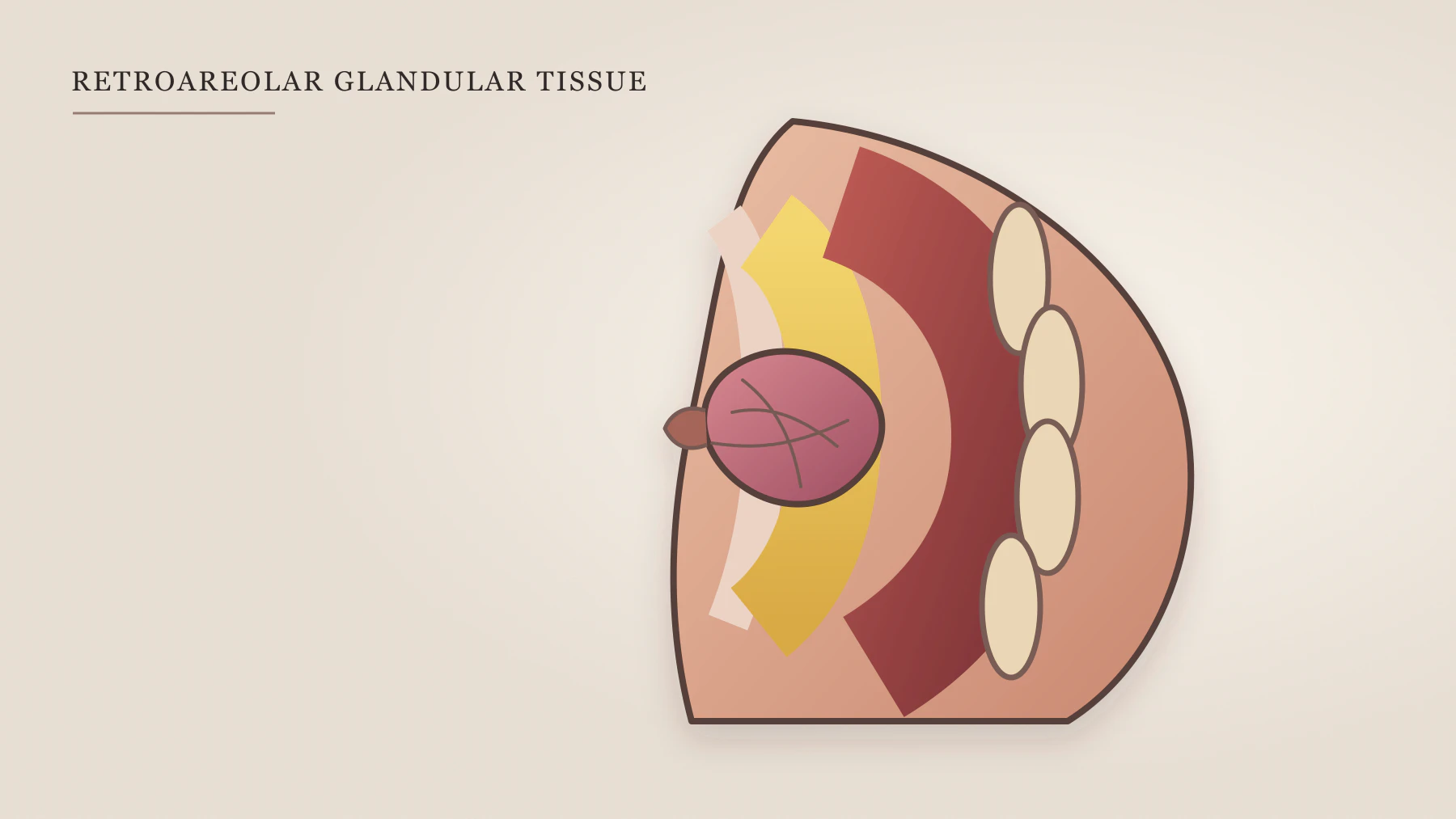
Gynecomastia is commonly graded on the Simon scale: grade 1 is a small enlargement without excess skin, grades 2a and 2b are moderate enlargement without and with minor skin excess, and grade 3 is marked enlargement with enough loose skin that the chest droops. The grade matters because it largely decides the operation. Lower grades are usually treated through a small incision at the areola's edge; grade 3 typically requires removing skin as well as tissue, which changes the scars, the recovery and the price.


The Simon scale

Four grades. Size, then skin.

Grade 1

A small, visible enlargement centred on the areola, with no excess skin. Often reads as "puffy nipples" on an otherwise flat chest. Usually addressed, when addressed at all, through a small incision at the areola edge.

Grade 2a

A moderate enlargement spreading beyond the areola, still without excess skin. The chest reads as full rather than nipple-focused. Typically treated with gland excision plus liposuction for the surrounding fat, through the same small access.

Grade 2b

The same moderate enlargement with minor skin excess: the skin has begun to stretch but is expected to retract acceptably. The operation is the same family as 2a, and the judgment call about the skin is exactly what the consultation is for.

Grade 3

A marked enlargement with obvious excess skin, where the chest droops and a fold has formed. Skin has to be removed as well as tissue, which means longer incisions, visible scars as a planned trade, and a different recovery and price band.

Reading the scale honestly

Two variables, one judgment call.

The scale is really measuring two things: how much tissue there is, and whether the skin over it can shrink back once the tissue is gone. Young, elastic skin forgives a lot, which is why two chests with the same volume can sit in different grades. It is also why the 2b boundary is the consultation's hardest question, and why a surgeon who examines your skin before quoting is doing the job and one who quotes from photos is doing arithmetic.

Self-grading is good enough to understand your options and roughly what they cost; it is not good enough to book an operation against. Whether the tissue is gland at all is the prior question, answered at /conditions/gynecomastia/vs-chest-fat/, and whether it might still resolve without anyone operating is at /conditions/gynecomastia/will-it-go-away/.

FAQ

Asked plainly, answered plainly.

How do I know my gynecomastia grade?
A reasonable self-estimate: nipple-focused puffiness with flat surroundings suggests grade 1, general chest fullness without loose skin suggests grade 2, and drooping with a visible fold suggests grade 3. The 2a versus 2b call, and anything near a boundary, is an examination question, since skin quality decides it.
Why does the grade change the price so much?
Because it changes the operation. A grade 1 excision and a grade 3 excision with skin removal differ in theatre time, anaesthesia, technique and follow-up. This is why a quote given before anyone knows your grade is a number to distrust: the observed market ranges by procedure are at /pricing/.
Does a higher grade mean surgery is urgent?
No. Gynecomastia is benign and the grade measures size and skin, not danger. What a higher grade does change is the operation needed if you choose one, and grade 3 skin excess does not improve by waiting.