Conditions · Gynecomastia

Gland or fat.
One minute to a good guess.

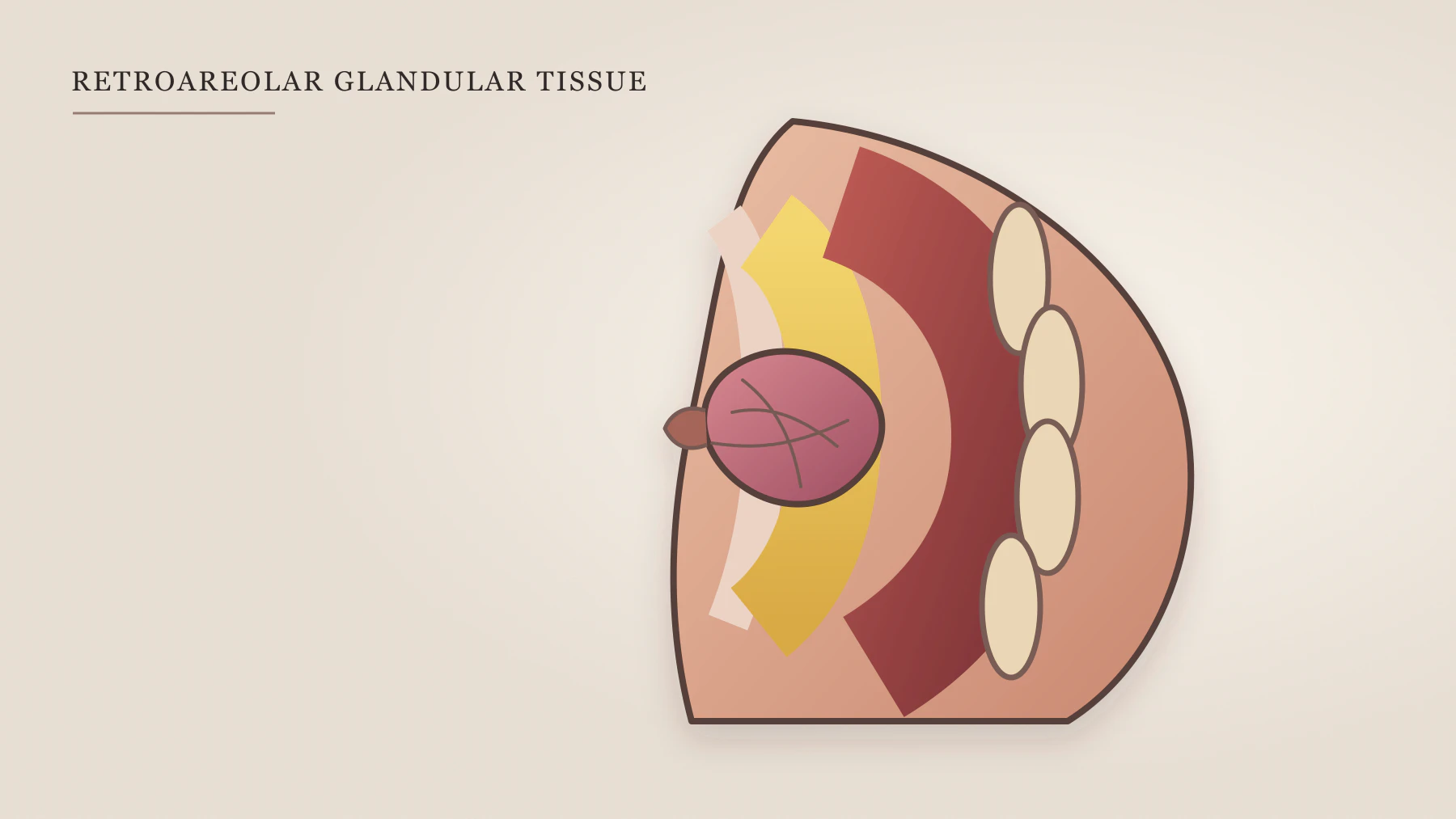
Gynecomastia is glandular breast tissue and pseudogynecomastia is fat, and the two answer to different things: fat responds to weight loss, gland does not. The practical test takes a minute. Pinch the tissue between thumb and forefinger, working from the outside of the chest toward the nipple: glandular tissue feels like a firm, rubbery disc directly under the areola, roughly coin-sized or larger, with an edge you can find. Fat feels uniformly soft the whole way in, with nothing distinct to press on.


Puffy nipples

The lean-body version is still the same tissue.

Puffy nipples are what a small amount of glandular tissue looks like on a lean chest: the disc sits directly under the areola and pushes it forward into a soft dome, most visible in warm conditions or after training. Men often arrive at this page assuming it is stubborn fat, because everything around it responds to diet and the dome does not. That is the tell. Fat distributed through the chest flattens as body fat drops; a gland-backed areola keeps its shape, and on some chests becomes more prominent as the fat around it disappears.

This is also why the internet's usual advice loop (cut, train chest, repeat) fails this specific case. Training builds the muscle behind the tissue and weight loss removes the fat beside it; neither has any mechanism for removing gland. The honest version of the advice is: if the pinch test says fat, the gym plan is the right plan. If it says disc, you are deciding about a small piece of tissue, not about discipline.

Side by side

Four differences you can check today.

Feel

Gland: a firm, rubbery disc under the areola with a findable edge. Fat: uniformly soft, no distinct structure anywhere in the pinch.

Location

Gland centres on the nipple, because that is where breast tissue lives. Fat spreads across the whole chest and blends into the armpit and abdomen.

Response to weight loss

Fat shrinks with the rest of you. Gland does not, and often looks more prominent on the leaner chest that remains.

Shape

Gland produces the focused, dome-forward areola. Fat produces a general fullness that hangs lower and moves with posture.

Why the difference matters

Different tissue, different everything.

The distinction is not academic: it decides the treatment category. Pseudogynecomastia is managed with weight loss, and surgically with liposuction alone if it comes to that. True gynecomastia that persists is removed by excising the gland, sometimes with liposuction for the surrounding fat, and the mix drives the operation, the scar plan and the price. Which is why a written quote should follow a diagnosis rather than a photo: the grades and what each usually needs are at /conditions/gynecomastia/grades/, and whether any of it resolves on its own is at /conditions/gynecomastia/will-it-go-away/.

FAQ

Asked plainly, answered plainly.

Are puffy nipples gynecomastia?
Usually, yes. The puffy or dome-shaped look comes from a disc of glandular tissue sitting directly under the areola and pushing it forward, which is gynecomastia by definition even when the rest of the chest is lean. Fat alone rarely produces that focused, nipple-centred shape.
Will losing weight fix it?
It fixes pseudogynecomastia, because that is fat. It does not remove glandular tissue. Many lean men find the puffiness more visible after weight loss, not less, because the fat around the gland shrank and the gland did not.
Can I really tell by touch?
The pinch test is a good first pass: gland feels like a firm, rubbery disc under the nipple with a defined edge, fat feels uniformly soft. It is a screen, not a diagnosis. Ultrasound settles it when touch is ambiguous.
When should I see a doctor instead of self-checking?
A lump on one side only, a hard or fixed mass, tenderness that appeared quickly, nipple discharge, or skin changes. Each of those is a reason for a proper examination rather than a comparison table, and male breast tissue can, rarely, harbor the same diseases as female breast tissue.